ACTIVITY IDEAS
10 fine-motor games using everyday materials
Simple, teacher-tested games that build small hands using pegs, paper, string, and things already in your cupboard.
Why fine-motor play matters
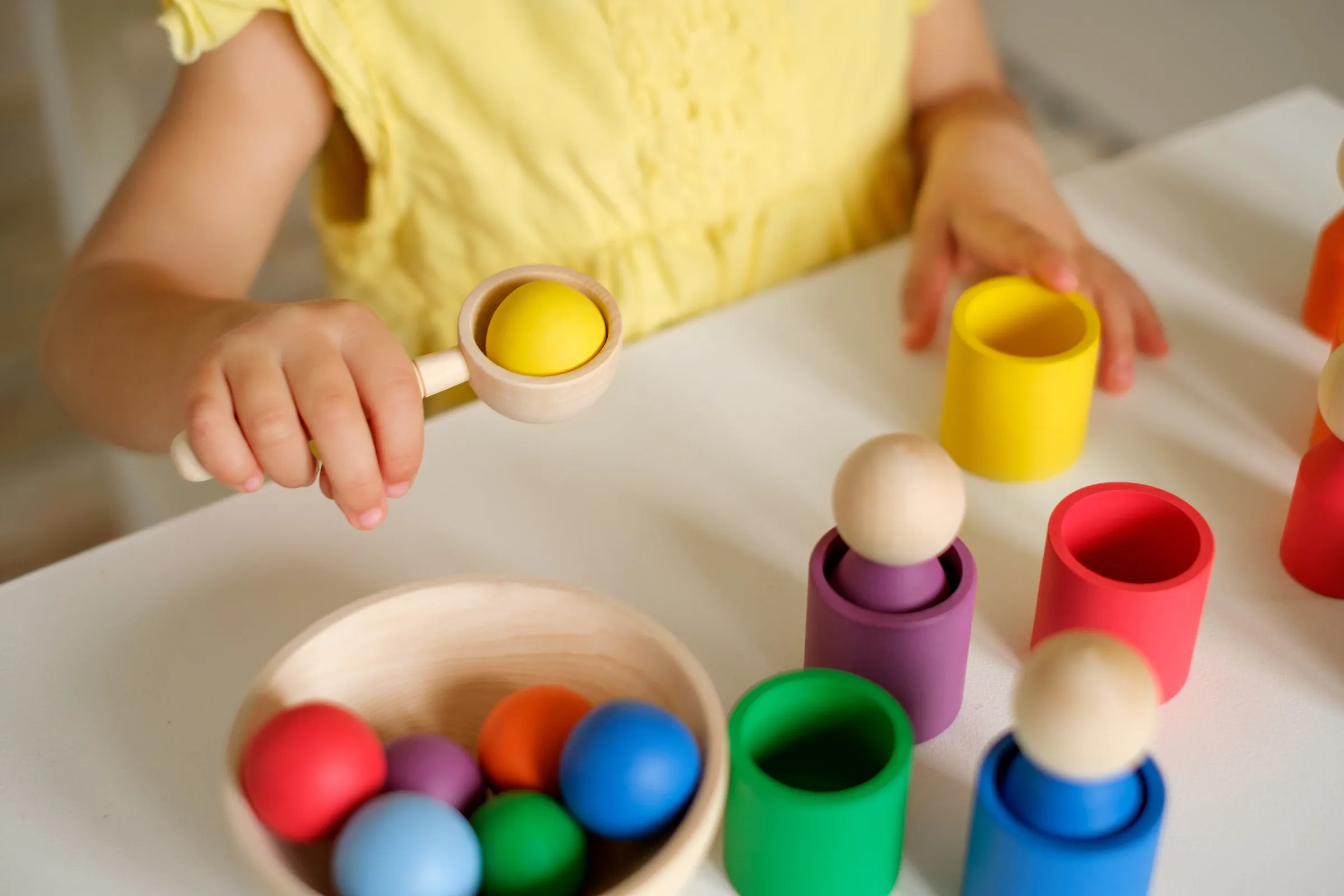
Fine-motor skills are the small, precise movements of the hands and fingers: the grip that holds a crayon, the pinch that picks up a bead, the twist that opens a jar. They develop through thousands of tiny repetitions, and they underpin the everyday independence young children are working toward, from buttoning a coat to pouring their own water to, eventually, writing their own name.
The encouraging part for educators: this practice does not require special equipment or a curriculum kit. It requires interesting things to pinch, thread, tear, clip, and sort, offered a little at a time. Children do the rest, because this kind of work feels like play to them.
What you’ll need
Every game below runs on materials most classrooms already have:
- Household items: clothespins, cotton balls, pom-poms, straws, tongs, paper cups, muffin tins
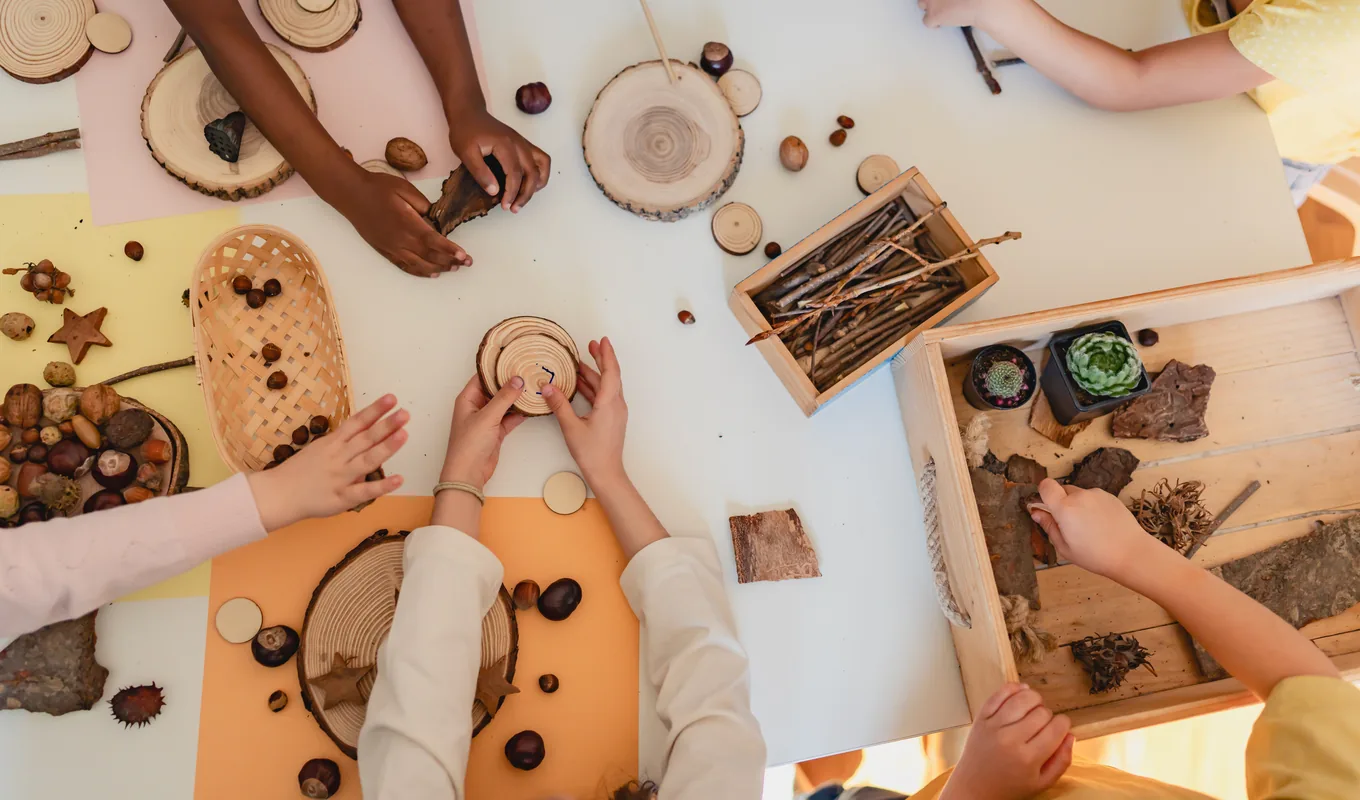
- Natural materials: pinecones, smooth stones, large leaves, sticks
- Recycled treasures: bottle caps, cardboard tubes, small boxes
- A tray or small basket to contain each game (a defined space helps focus)
One habit worth keeping: rotate rather than pile. Two or three games out at a time keeps the shelf interesting for weeks.
10 easy activity ideas
-
Pom-pom pick-up. Use tongs or a large spoon to move pom-poms into the cups of a muffin tin. For older children, call out a color per cup.
-
Clothespin clip-around. Clip clothespins around the rim of a box or sturdy paper plate, then unclip them into a basket. Squeezing a pin is a workout for the exact muscles that will later hold a pencil.
-
Straw threading. Cut straws into short pieces and thread them onto a shoelace or pipe cleaner. Knot one end first so the work does not slide away.
-
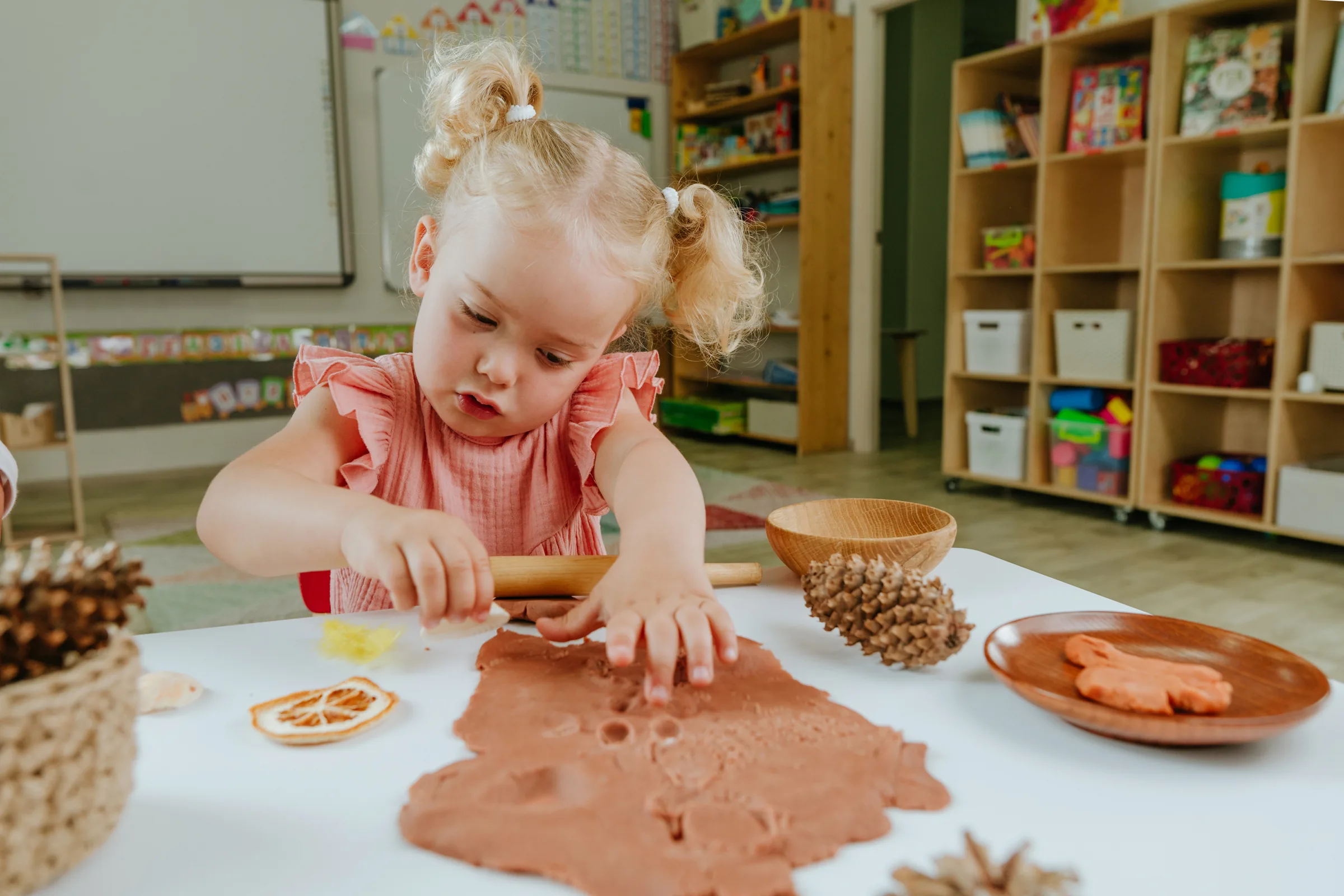
Nature sorting. Offer a tray of pinecones, stones, and leaves with two or three bowls. Sort by kind, by size, or by “heavy and light.” Add large tweezers for children ready for more challenge.
-
Paper tear and scrunch. Tear scrap paper into small pieces, then roll the pieces into tiny balls. Collect them in a cup and use them later for a collage. Tearing is its own skill and a satisfying one.
-
Bottle-cap twist station. Save a few clean jars and bottles with lids of different sizes. Match each lid to its container and twist it closed. This one quietly builds wrist rotation.
-
Sticker peel and place. Peeling a sticker off its sheet takes real finger precision. Draw large dots on paper and ask children to land a sticker on each one.
-
Cotton-ball rescue. Drop cotton balls into a cardboard tube taped to the wall at child height and watch them shoot out the bottom into a basket. Loading the tube is the fine-motor work; the delivery is the reward.
-
Pipe-cleaner sculptures. Poke pipe cleaners into the holes of a colander or a block of playdough. Bend, connect, and build. There is no wrong answer, which makes this a calm choice for mixed ages.
-
Water transfer. With a sponge or a small dropper, move water from one bowl to another. Add a drop of food coloring to make the progress visible. Squeezing a sponge dry is wonderful hand strengthening, and spills are part of the learning.
Make it work for your room
Offer these games in a quiet area, at a table, or as learning-center choices for a small group. Keep each game on its own tray so setup and cleanup stay child-sized. Rotate materials when interest dips, and invite children to invent the next variation; they usually will.
Observation tip: watch for a steadier grip, growing hand strength, and longer persistence over time. Those small changes are the skill developing in front of you.
“You don’t need expensive equipment to support development. You need the right activity for your exact group, built from what’s already in the room.”
Take it further
Once a game is familiar, stretch it gently: add a timer for children who enjoy a challenge, swap tongs for tweezers, or turn sorting into patterning. The material stays the same; the thinking grows. And when a game lands especially well with your group, write down what made it work. That is the beginning of your own bank of what works, and it is exactly the kind of knowledge worth keeping.
All activities are intended for adult-supervised settings. Use your professional judgment about materials and suitability for the children in your care.