Inclusion & access
Simple modifications that include every child
Small changes, organized by access barrier, that open every activity to every child.
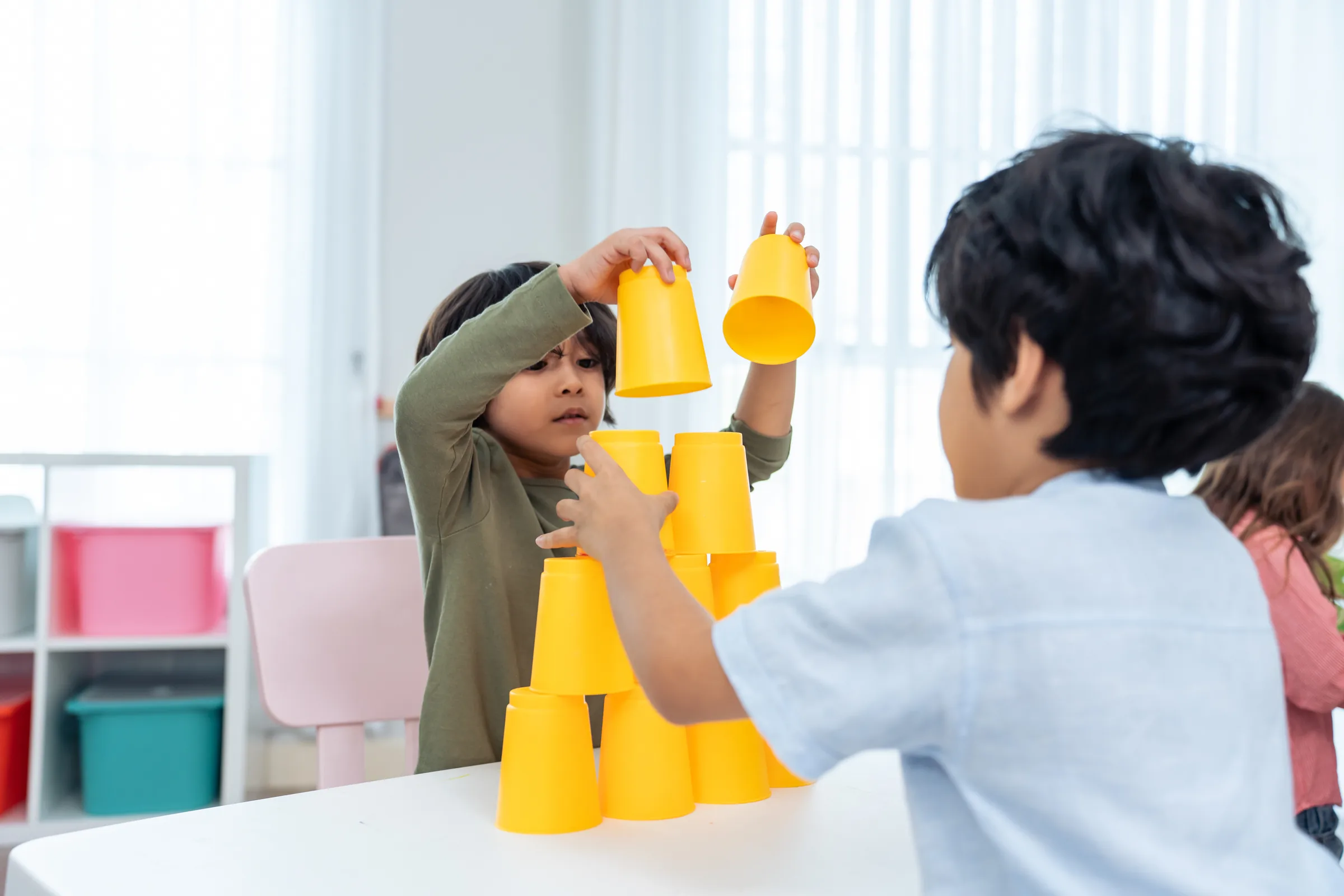
Every educator has lived this moment: the activity is going beautifully for most of the group, and one child is on the edge of it, unable to get in. Maybe the scissors will not cooperate with their hands. Maybe the instructions went by too fast. Maybe the glue’s texture is unbearable, or joining four other children feels impossible today. The activity did not fail. It just did not have enough doors.
The good news, which specialists have known for decades and classrooms are still absorbing: most children do not need a different activity. They need a different door into the same one. And most of those doors take under a minute to build.
Think in barriers, not diagnoses
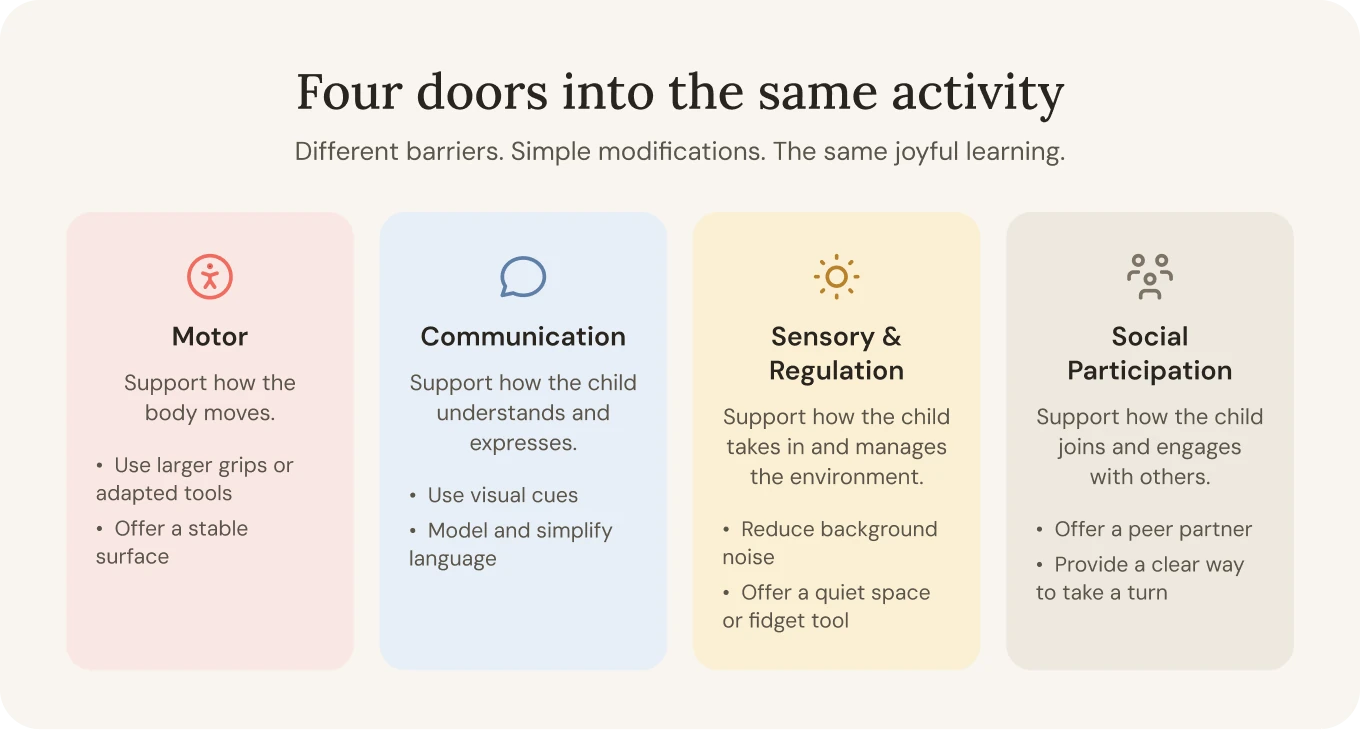
The unhelpful way to plan inclusion is by diagnosis: one plan for this label, another for that one. Labels do not tell you what a child can do in your room today, and most groups include children with needs and no label at all. The useful way, the way specialists actually think, is by access barrier: what part of this activity might block a child, and what is the smallest change that removes the block? Four barriers cover most of classroom life.
Motor: the hands or body cannot do the action as designed. The door is usually size, stability, or grip. Bigger pieces instead of smaller. The paper taped down so it stops escaping. Chunky crayons, loop scissors, a tray with edges. Standing instead of sitting, or the floor instead of the table. The child does the same activity; the physics got friendlier.
Communication: the instructions or the participation depend on language a child does not have yet. The door is showing alongside saying: demonstrate the first step instead of only describing it, pair words with gestures, let a child point or hand you something instead of answering aloud. A picture of the finished thing does more than a paragraph about it. This door also serves every child learning English, which in many rooms is half the class.
Sensory and regulation: the activity’s feel, sound, or pace overwhelms, or does not offer enough. This door swings both ways, and both matter. For the child avoiding sensation: a dry version of the messy thing, a spoon or brush instead of fingers, a seat at the edge, permission to watch first. Watching is participation; it is how some children rehearse. For the child seeking sensation: a bigger movement built in, the job of carrying the heavy basket, more of the texture rather than less. Same activity, adjustable volume.
Social participation: joining the group is itself the hard part. The door is structure: a defined role (“you hand out the cups”) beats an open invitation to join; a partner beats a crowd; a clear turn order beats a scramble. Parallel first, together second. Some children enter the group activity sideways, and sideways counts.
What makes a modification good
Three tests. It is small: under a minute, using what is in the room. It is invisible or dignified: the child is doing the activity, not doing the special version at the special table. And it is offered to anyone: chunky crayons on the table for whoever wants them include without pointing. The best modifications quietly improve the activity for the whole group, which is why experienced teachers keep them in place even in weeks when no one seems to need them.
The line that keeps everyone honest
Classroom-level strategies like these support the whole group. They never replace any child’s individual IEP or 504 plan, and they are not a substitute for the specialists who write and deliver those plans. A modification that lets a child join the painting today lives comfortably alongside, never instead of, the individual work that child may be doing with a therapist on Thursday. Educators who hold that line get the best of both: an included classroom and properly served children.
The planning cost, and the shortcut
Here is what this asks of a planning educator: for every activity, think through four barriers and prepare a door for each, for a group whose needs you carry in your head. Specialists spend careers getting fast at this. Educators do it at night, after everything else.
Maloo builds it in. Every card includes inclusion strategies organized exactly this way, by access barrier rather than diagnosis, shaped to the activity on the card and the classroom described in your profile. If your profile says you run an inclusion or specialized classroom, activities are designed with those needs at the center from the start rather than adapted after. The doors come pre-built; you decide which children need them opened. That last part, knowing your children, was never going to be automated, and it is the part that makes it work.